How to Sell Your Luxury Seaport Boston Condo
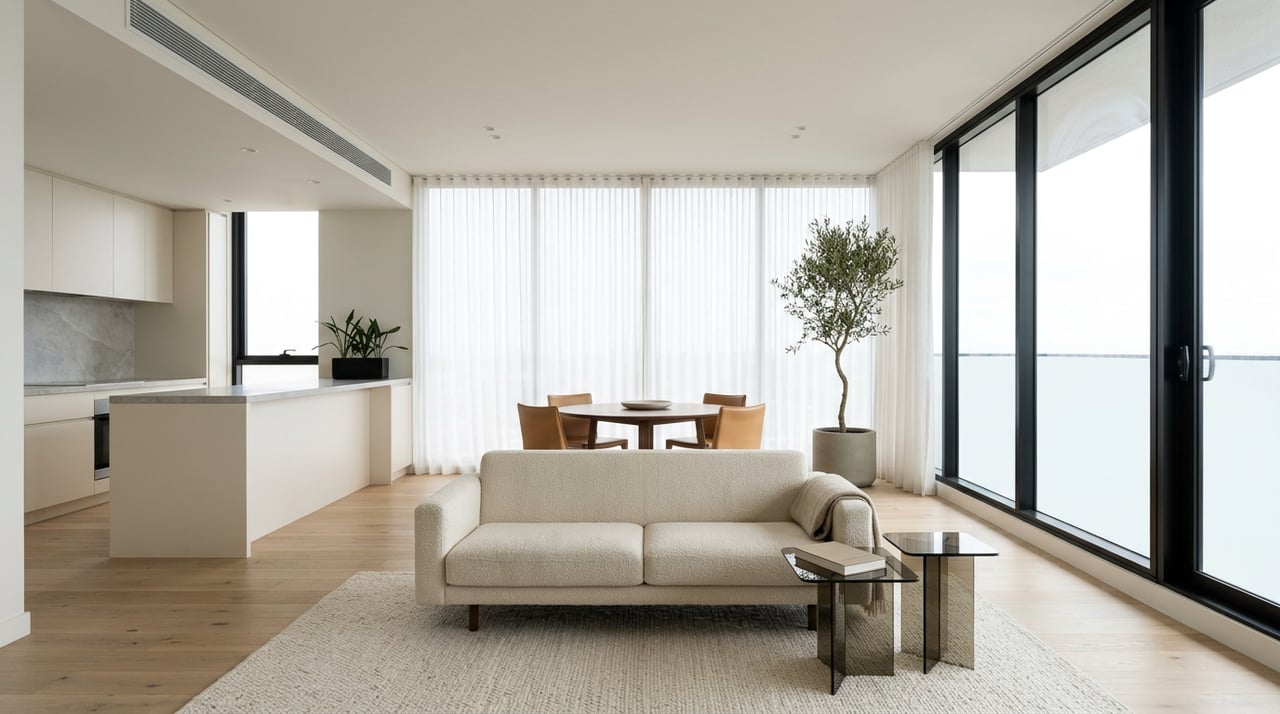
Thinking about selling your Seaport condo and wondering how to stand out in a skyline of glass and amenities? In 02210, the right price, timing, and presentation can shift your days on market and your final number. You want a straightforward plan that respects your time and protects your outcome. In this guide, you’ll learn how to price for amenity-rich towers, time your launch around new deliveries and lender rules, prep your home and media, and tailor marketing by view and unit type. Let’s dive in.
Seaport remains one of Boston’s highest-price condo markets, with recent reports showing average values near the mid to high seven figures and median closed prices around the low two millions depending on the month. At the same time, year-over-year volatility has been notable as new luxury supply hits the market. That means broader neighborhood medians can be misleading for your unit. You’ll want comps from your building and your exposure line before you set price.
Local seasonality still matters. Spring often sees stronger buyer activity, but you should confirm momentum with a current neighborhood report before you pick a launch date. You can review recent trend snapshots in resources like the Seaport District market report to gauge days on market and pending ratios (Seaport market report).
Pricing a high-rise condo in Seaport is a different exercise than pricing a brownstone. Buyers weigh your unit’s exposure and finishes alongside the building’s amenities and monthly fees. A clear strategy helps you avoid unnecessary price cuts later.
Start by separating unit-level features from building-level benefits. Unit elements include floor height, corner or harbor exposure, outdoor space, parking, layout, and recent upgrades. Building value covers the amenity set and services such as pools, fitness, spa, concierge, valet, and on-site retail. Amenity-rich towers can command premiums, but buyers balance those premiums against monthly condo fees and taxes.
High-service buildings often have higher monthly common charges. Most buyers underwrite the purchase in net monthly cost terms that include mortgage, taxes, condo fee, and parking. Lenders also review a building’s reserves, any special assessments, and structural disclosures more closely today. Understanding updated guidance and project reviews up front can protect your timeline (condo project review overview).
Your best comps come from the same tower and, ideally, the same exposure line two to four floors above or below. If those are thin, widen to sibling buildings with similar age, amenities, and quality. Avoid overreliance on neighborhood medians in a submarket where one or two large project releases can temporarily shift averages.
Convert your list price into a simple buyer-facing cost sheet. Show two mortgage rate scenarios, monthly taxes, condo fee, typical utilities, and parking. A one-page summary reduces surprises for buyers and their lenders, which can support stronger offers and smoother approvals.
Inventory in Seaport can arrive in waves when new phases at towers like EchelonSeaport, St. Regis Residences, Fan Pier, or Pier 4 come to market. If a cluster of comparable listings is expected inside your 6 to 18 month window, your strategy may change. Listing earlier, investing in targeted upgrades, or adjusting price bands can help you lead the market rather than chase it.
Confirm demand indicators before you choose a launch week. Watch days on market, ratio of actives to pendings, and the calendar of expected new releases. Seasonal strength can help, but new-construction timing and buyer financing conditions should drive your final call (Seaport trend snapshot).
Since 2021, lenders have tightened how they evaluate condo projects. They look for healthy reserves, low delinquency, no imminent large special assessments, and up-to-date inspections. If a building flags in project review, a buyer’s loan options can narrow to portfolio products, which can shrink the buyer pool. Order building documents early and invite the buyer’s lender to begin project eligibility checks promptly (what lenders review in condos).
A strong launch starts weeks before your first photo. Get ahead of paperwork, dial in cosmetics, and plan premium media that highlights what makes your residence special.
In Massachusetts, the resale or estoppel certificate, often called the 6(d), confirms assessments and lien status. Associations typically have a defined response window and charge a fee, so ordering at listing helps you avoid last-minute delays (Chapter 183A, Section 6). If you want a plain-language overview of timing and expectations, review this guide to resale certificates and estoppels (Massachusetts condo resale certificate guide).
Request the current budget, most recent reserve study, and the last 12 months of association minutes. If any capital projects, bids, or special assessments are under discussion, you want that documented early. Transparent, complete documentation supports buyer confidence and lender approvals.
Start with neutral paint, deep cleaning, decluttering, hardware refreshes, and lighting. In luxury towers, buyers focus on the kitchen and primary bath, so small, targeted updates can shift your price band. Professional staging and lifestyle details can materially improve online engagement and time on market for higher-end listings (staging impact statistics).
Book a photographer who can deliver high-resolution interiors, blue-hour images for skyline and harbor views, and a crisp floor plan. Add a Matterport or 3D tour for remote and international buyers who rely on virtual walkthroughs. Trade guidance supports professional imagery and targeted distribution for luxury properties (NAR luxury marketing guidance).
Seaport sits close to Logan Airport, which is controlled airspace. If you want aerials, use a licensed operator who can comply with FAA requirements, including Remote ID and LAANC or specific authorizations. Confirm building and local permissions before you schedule shoots (FAA LAANC overview).
Not every Seaport condo should be marketed the same way. Tailor your message and media to your unit type to reach the right buyers.
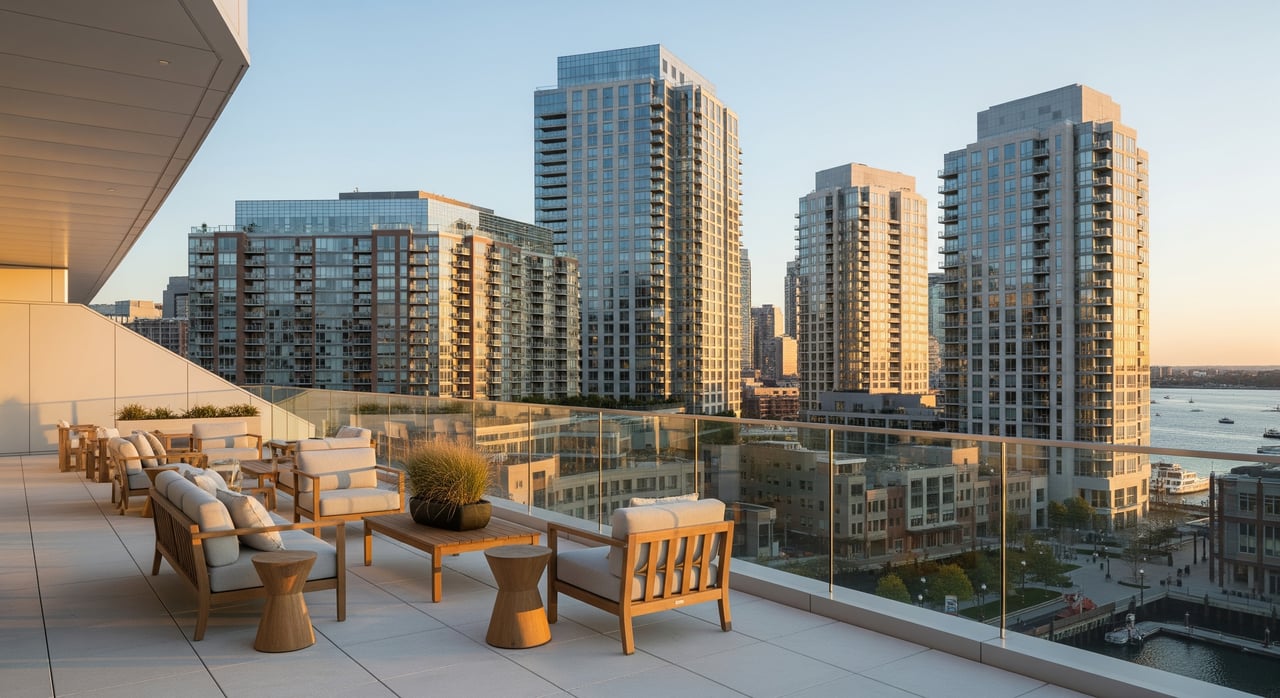
Lead with the experience. Capture sunrise or sunset sequences, time-lapse harbor activity, and terrace entertaining moments. Showcase the quiet at dawn and the sparkle at blue hour. Recent coverage of Seaport’s branded residences shows how view-forward storytelling elevates premium listings (St. Regis Residences feature).
Emphasize daylight and multi-aspect views. Stage a flexible layout that shows an inviting work zone without compromising living space. Daytime photography that captures scale and flow tends to perform best for these residences.
For multi-million-dollar penthouses and large outdoor spaces, consider an invite-only broker event and a private marketing packet. Invest in cinematic video, 3D walkthroughs, and, where permitted, authorized aerials. Leverage luxury distribution channels and broker networks to reach local executives, second-home buyers, and international prospects (global luxury marketing guidance).
Use this quick checklist to prepare a confident launch in 02210:
A seasoned Seaport advisor helps you anticipate building-specific questions, align pricing with in-tower comps, and position your listing against new deliveries. You benefit from trusted vendors, faster document collection, lender-ready packaging, and tailored outreach to the right buyer pool. For premium residences, that coordination often shows up in fewer price reductions and a cleaner path to closing.
With BostonBaron, you also gain boutique, white-glove service backed by the resources of William Raveis. That includes curated marketing, concierge transaction management, and access to programs like Raveis Refresh for pre-listing preparation and bridge financing options when you are sequencing your next move. If you want a private, data-informed plan for your Seaport sale, let’s talk.
Ready to map your strategy and timeline? Schedule a discreet consultation with Gabrielle Baron to discuss pricing, preparation, and the best window to launch in 02210.
Stay up to date on the latest real estate trends.



Get assistance in determining current property value, crafting a competitive offer, writing and negotiating a contract, and much more. Contact me today.