How Competitive Offers Win Seaport and Waterfront Condos
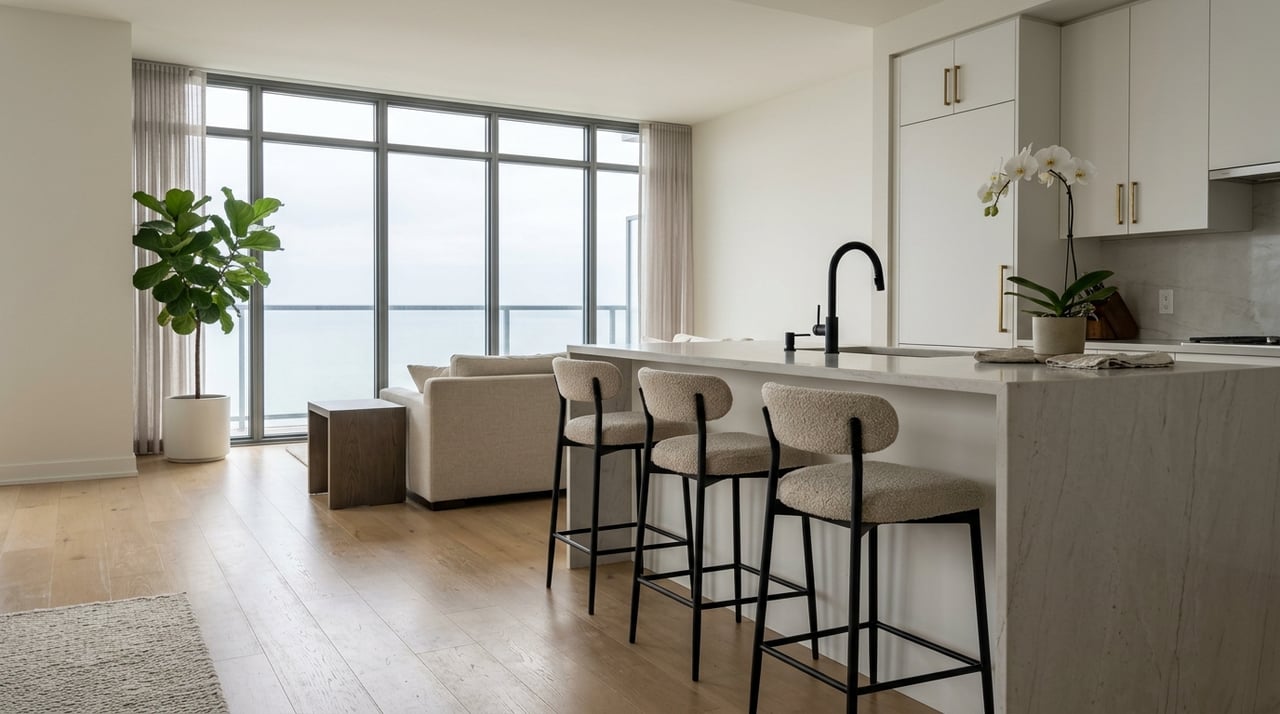
Buying a condo in Seaport or along Boston’s Waterfront can feel like a balancing act. You want an offer strong enough to stand out, but not so aggressive that you give away leverage or skip smart due diligence. In this market, the best offers are usually the ones that combine price, preparation, and clean terms in a way that gives the seller confidence. Let’s dive in.
If you are shopping in 02210, it helps to know that this is not a one-speed market. Redfin’s May 2026 snapshot shows a median sale price of $1.304 million, median days on market of 54, a 96.7% sale-to-list ratio, and just 7.4% of homes selling above list price. Some homes still attract multiple offers, but not every listing is moving at the same pace.
That difference matters even more in Seaport and the Waterfront. As of April 2026, Seaport had 51 units in inventory, 10.2 months of supply, 110 average days on market, and sellers receiving 94.11% of original list price on average. The Waterfront showed 68 listings, 8.7 months of supply, 104 days on market, and 95.0% of original list price received.
In plain terms, this means a stronger offer is not always the highest offer. In these luxury condo submarkets, certainty, timing, and a clean structure can be just as persuasive as headline price, especially when a listing has been sitting.
A strong Seaport or Waterfront condo offer usually does three things well. It shows you are financially ready, it reduces avoidable friction for the seller, and it stays disciplined about the risks that matter.
That approach fits the current market. New or especially well-positioned units can still move quickly, but slower inventory often creates room to negotiate on price, contingencies, or timing. The key is knowing when to lean in and when to stay measured.
Before you compete for a premium condo, get your financing organized. Preapproval, complete financial documents, and accessible cash reserves all help show that you are prepared to perform.
For sellers, readiness lowers uncertainty. If two offers are close on price, the one that looks cleaner and more certain often feels safer to accept. In a high-value condo purchase, that confidence can matter a great deal.
Earnest money is one of the clearest ways to signal commitment. Wells Fargo notes that earnest money is typically 1% to 2% of the sale price, and in the luxury condo space, some buyers may choose a larger deposit if they are comfortable with the risk.
That does not mean you should stretch beyond your comfort zone. It means the deposit should match the seriousness of your offer and your overall strategy. A well-structured deposit can help your offer feel substantial without changing the price.
A cleaner offer is often a stronger offer. That can mean limiting minor repair requests, tightening timelines, or removing nonessential hurdles that make a seller worry about delays.
It does not mean ignoring important diligence. In Seaport and Waterfront condos, you still want to protect yourself on the issues that can affect value, ownership costs, and future resale. Stronger offers are disciplined, not reckless.
In a market where Seaport and Waterfront listings are taking more than 100 days on average to sell, offer structure can carry real weight. Sellers may care deeply about net proceeds, but they also care about whether the deal is likely to close smoothly.
That is why a slightly lower offer with cleaner terms can sometimes outperform a higher offer with more uncertainty. If a seller sees fewer obstacles, clearer proof of funds, and a timeline that works, your offer may feel more attractive overall.
Not every condo deserves the same offer strategy. A fresh listing in a premier building may require a more competitive opening position, especially if it is well priced and well presented. A unit with longer days on market may allow more room to negotiate price or structure.
The market data supports this nuance. Seaport and Waterfront are supply-heavy relative to the broader Greater Boston condo market, where GBAR reported 2.9 months of inventory and 61 cumulative days on market in March 2026. In other words, local condo strategy should be specific to the building, the listing, and the seller’s likely priorities.
Closing timing can matter as much as price. If the seller needs extra time after closing, a written rent-back agreement may help bridge the gap, and Chase notes that these arrangements commonly run up to 60 days.
That kind of flexibility can make your offer easier to accept without increasing your purchase price. In luxury transactions, thoughtful timing solutions often help both sides move forward with less friction.
If you can buy with cash, that can simplify the transaction from the seller’s perspective. Cash offers remove financing contingencies and reduce appraisal uncertainty, which is one reason they remain powerful in premium condo purchases.
But not every buyer wants to tie up that much cash. If you want some of the benefits of a cash offer without paying entirely in cash, there are a few tools worth discussing early with your lender and advisor.
Cash-offer programs are designed to make your offer look cash-like to the seller. Chase explains that these programs generally work by having a company buy the home on your behalf and then sell it back to you after your mortgage closes.
These programs can be useful when certainty is the seller’s top concern. They may also involve fees, affiliated lender requirements, and extra reserve or liquidity standards, so they work best when planned ahead rather than used as a last-minute fix.
If you already own a home and have equity, bridge financing may help you buy before you sell. Chase describes bridge loans as short-term financing that can support a purchase while you wait for proceeds from your current property.
This can be especially valuable if you are moving between Boston neighborhoods or relocating from a suburb into the city. A bridge structure may help you write a cleaner offer while giving you more control over the timing of your move.
Some buyers also choose to purchase with cash and finance later. Wells Fargo notes that this can present a cleaner offer, though the exact timing and rules vary by lender and loan type.
The main point is simple: if you want a cash edge, build that strategy early. The best financing-enabled offers are coordinated well before you submit, not improvised under pressure.
In Massachusetts, condo ownership is governed by documents such as the master deed, deed, bylaws, and Chapter 183A. Mass.gov also notes that condo-law questions should be reviewed with an attorney who has real estate experience.
That is especially important in amenity-rich Seaport and Waterfront buildings, where shared systems, staffing, maintenance, and capital projects can have a meaningful effect on your total cost of ownership. A strong offer should position you to move quickly on diligence, not skip it.
After an offer is accepted, you should be ready to review the association budget, reserve funds, rules, meeting minutes, and any pending or likely special assessments. Massachusetts law requires an adequate replacement reserve fund, and condo documents govern reserves and assessments.
This review matters because building costs do not stop at the purchase price. In full-service towers, upcoming repairs or improvements may lead to assessments that affect your financial picture and long-term plans.
Many buyers ask whether a stronger offer always means waiving inspection or overlooking building issues. The answer is no. A cleaner offer can mean fewer nonessential asks, faster turnaround, and more certainty for the seller, while still preserving the diligence you need on material concerns.
That distinction is especially important in luxury condos. Building health, reserves, and governance are part of what you are buying, so they deserve real attention.
Flood risk is part of condo ownership in Seaport and along the waterfront, and it should be treated as a real value consideration. Boston.gov notes that neighborhoods such as the Seaport were built on historic landfill, that much of this created land is vulnerable to coastal flooding, and that the city is planning around future sea-level rise and 1% annual chance storm conditions for 2070.
Boston also notes that FEMA flood maps are the official tool for understanding flood risk. Areas with a 1% annual chance of flooding carry a 1-in-4 chance over a 30-year mortgage, which makes this an ownership issue worth reviewing carefully.
When you are evaluating a Seaport or Waterfront condo, keep your questions practical and specific:
These questions do not make your offer weaker. They help make your purchase smarter and more complete.
In Seaport and Waterfront, stronger offers are rarely about bravado alone. They are about presenting yourself as ready, credible, and easy to work with while staying disciplined on the details that protect your investment.
That balance is where experienced guidance matters most. If you are preparing to buy in 02210 and want a strategy tailored to the building, listing, and your financing options, Gabrielle Baron can help you build an offer that is competitive, polished, and grounded in the realities of Boston’s luxury condo market.
Stay up to date on the latest real estate trends.



Get assistance in determining current property value, crafting a competitive offer, writing and negotiating a contract, and much more. Contact me today.